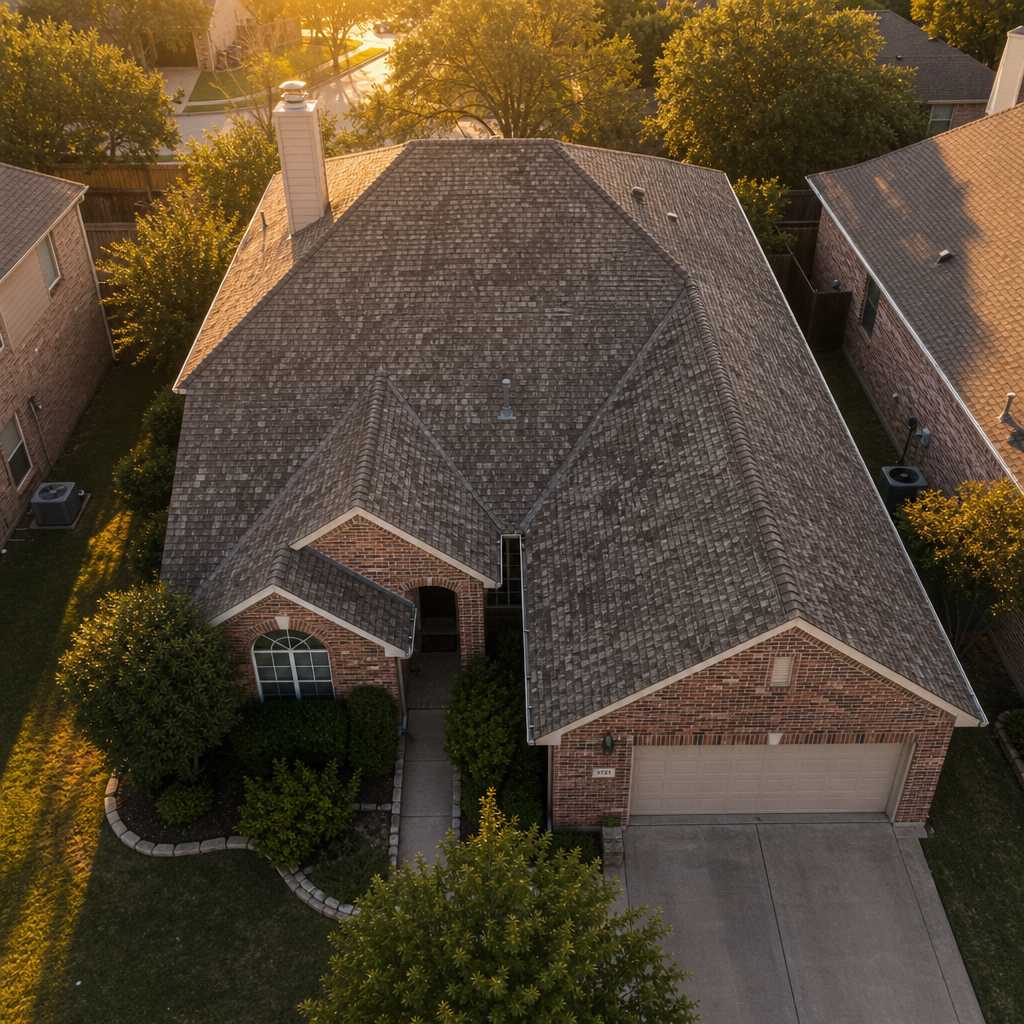

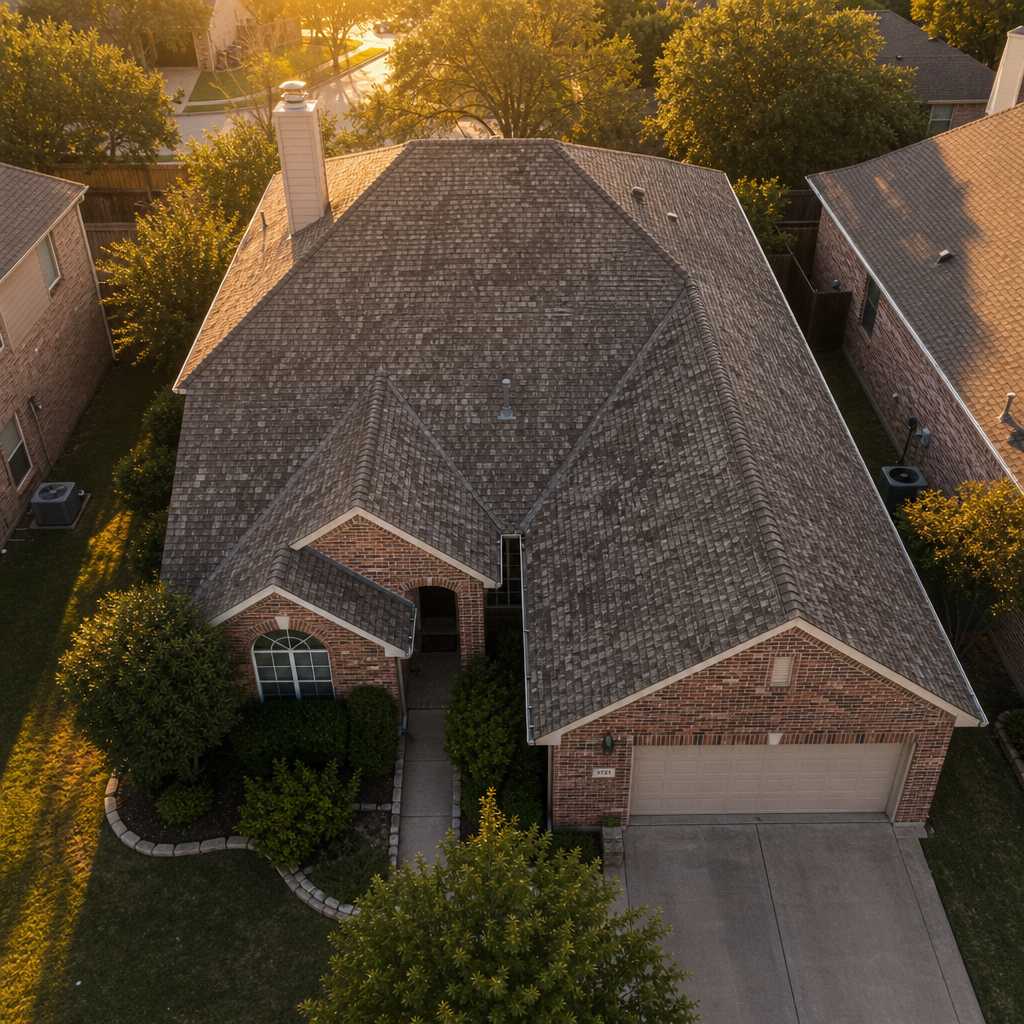
Most Dallas homeowners facing a roof replacement ask the same question: asphalt shingle or metal roof? It sounds simple, but the answer has real financial consequences. The average asphalt shingle roof in Texas lasts 15 to 20 years in the DFW climate, while a standing-seam metal roof can last 40 to 70 years according to the Metal Roofing Alliance. With hail storms, brutal summer heat, and the occasional ice event hitting North Texas every single year, your roofing material choice is not a cosmetic decision. It is a structural and financial one. Here is what the data and real installation experience show.
Table of Contents
- Quick Takeaways
- Why Dallas Climate Changes the Math
- Asphalt Shingles: Real Performance in DFW
- Metal Roofs: Real Performance in DFW
- Cost Comparison: Upfront vs Lifetime
- Insurance Claims and Roofing Material in Texas
- Head-to-Head Comparison Table
- Which Homeowners Should Choose Metal
- Which Homeowners Should Choose Asphalt
- Frequently Asked Questions
- References
Quick Takeaways
|
Key Insight |
Explanation |
|---|---|
|
Metal roofs outlast asphalt 2x to 3x in DFW conditions |
Metal roofs typically last 40 to 70 years. Asphalt shingles in Texas heat average 15 to 20 years before replacement is needed. |
|
Asphalt costs 30% to 50% less upfront |
A standard asphalt shingle roof in Dallas runs $8,000 to $15,000. A comparable metal roof runs $18,000 to $35,000 or more depending on material grade. |
|
Impact-resistant shingles can lower Texas insurance premiums |
Class 4 impact-resistant asphalt shingles qualify for discounts from many Texas insurers, sometimes 20% to 30% off the wind and hail portion of your premium. |
|
Metal roofs reflect 25% to 95% of solar energy |
A cool metal roof with reflective coating can reduce attic temperatures significantly, cutting cooling costs during Dallas summers. |
|
Hail damage affects asphalt shingles more visibly |
Asphalt shingles show granule loss after hail events, which triggers insurance claims more easily. Metal panels can dent but often retain full waterproofing function. |
|
Architectural shingles are the dominant choice in DFW neighborhoods |
Most HOAs in Plano, Frisco, and Allen require materials that match neighborhood aesthetics. Architectural shingles blend in. Metal standing seam does not always get HOA approval. |
|
EverEdge Roofing installs both systems and advises based on your home, not a sales script |
As a family-owned DFW roofing company, EverEdge provides honest material recommendations rather than pushing the higher-margin option every time. |
Why Dallas Climate Changes the Math
Dallas-Fort Worth is one of the most demanding roofing environments in the United States. The region averages over 50 severe hail days per year, and summer attic temperatures regularly exceed 150 degrees Fahrenheit. These are not abstract concerns. They directly accelerate the degradation of asphalt shingles and test the fastener systems on metal roofs.
Thermal expansion is a genuine issue with metal roofing in Texas. Steel expands and contracts more than asphalt as temperatures swing from 100-degree July afternoons to freezing February nights. A properly installed metal roof uses floating fastener clips to handle this movement. A poorly installed one will develop leaks at panel seams within a few years. In practice, the installer’s experience matters as much as the material itself.
UV radiation in North Texas is intense enough to degrade asphalt shingle granules over time. This granule loss reduces the shingle’s reflectivity and its ability to protect the underlying mat from the sun. Quality architectural shingles rated for high-UV environments perform better, but none eliminate this limitation entirely.


Pro tip: If your current asphalt roof is more than 12 years old and you have filed at least one hail claim, ask your EverEdge inspector whether your remaining useful life justifies another shingle repair or whether a full replacement makes more financial sense before the next storm season.
Asphalt Shingles: Real Performance in DFW
Why Asphalt Still Dominates the DFW Market
Roughly 80% of homes in the Dallas-Fort Worth area use asphalt shingles, according to roofing industry installation data. The reasons are straightforward: lower upfront cost, wide color availability, ease of repair, and compatibility with nearly every home style from Frisco new-builds to older Oak Cliff bungalows.
Architectural (dimensional) shingles have largely replaced three-tab shingles in new installations. They carry better wind ratings, typically 110 to 130 mph, and have a layered appearance that adds visual depth. For most DFW homeowners replacing a standard residential roof, a quality architectural shingle from GAF, Owens Corning, or CertainTeed is a proven, cost-effective choice.
Where Asphalt Shingles Fall Short in Texas
The Texas heat cycle is genuinely punishing on asphalt. Shingles soften in extreme heat and can blister or crack as they age. After 10 to 12 years on a south-facing slope in Dallas, granule loss becomes visible and functional performance starts to decline. This is not a manufacturer defect. It is the expected behavior of asphalt in a high-UV, high-heat climate.
Hail damage is the other limiting factor. A large hailstorm can remove enough granules in a single event to shorten the roof’s remaining lifespan by several years. This is why so many DFW homeowners file insurance claims after major storms. The damage is real and documentable. An experienced roofing company, like EverEdge, can identify genuine hail damage versus normal wear during a free roof inspection that supports your insurance claim process.
A common mistake is choosing the cheapest three-tab shingle to save money upfront. Three-tab shingles have wind ratings as low as 60 mph, which is inadequate for Texas thunderstorm conditions. Always specify architectural shingles rated for at least 110 mph winds in any DFW installation.
Metal Roofs: Real Performance in DFW
Standing Seam vs Exposed Fastener Metal Roofing
Not all metal roofing is the same. The two main types installed in DFW are standing-seam panels and exposed-fastener panels. Standing-seam systems hide all fasteners within raised seams, which eliminates the most common source of metal roof leaks. Exposed-fastener systems cost less but require periodic re-tightening of screws as the panels expand and contract with temperature changes.
For residential metal roof installation in Dallas, standing-seam steel or aluminum is the recommended system. It handles the Texas thermal cycle better, qualifies for better manufacturer warranties, and holds up to hail without losing waterproofing integrity the way exposed-fastener panels can.
Energy Efficiency Gains Are Real But Require Proper Installation
Metal roofs with reflective Kynar coatings or ENERGY STAR-certified finishes can reduce heat gain significantly. The U.S. Department of Energy notes that cool roofing materials can lower roof surface temperatures by up to 50 degrees Fahrenheit compared to conventional materials. In a Dallas summer, that translates to lower air conditioning demand.
The catch is that the energy savings depend on proper attic ventilation working alongside the roof. A metal roof installed over a poorly ventilated attic will still trap heat below. The roof is one component of a system. EverEdge evaluates your existing attic ventilation during any roofing consultation, which is something many competitors skip.
“Metal roofing has moved from niche agricultural product to mainstream residential option in Texas partly because homeowners are factoring lifetime cost, not just installation cost, into their decisions.” – Metal Roofing Alliance, residential market research
Cost Comparison: Upfront vs Lifetime
The upfront cost gap between asphalt and metal is significant and should not be minimized. A mid-grade architectural shingle roof on a 2,000-square-foot Dallas home typically costs $10,000 to $16,000 installed. A standing-seam steel or aluminum roof on the same home runs $20,000 to $38,000 depending on panel profile, coating, and complexity of the roofline.

Over 40 years, the math shifts. An asphalt roof in DFW conditions may need full replacement twice in that period, potentially costing $30,000 to $40,000 total in today’s dollars, plus repair costs along the way. A metal roof installed correctly once may last the full 40 years with minimal maintenance. The break-even point typically falls between 20 and 25 years if you stay in the home long enough.
If you plan to sell within 10 years, asphalt shingles almost always make more financial sense. The resale value premium for metal roofing rarely recovers the full installation cost difference in a DFW market where buyers expect asphalt. If you plan to stay long term, metal becomes a strong contender.
Pro tip: When comparing quotes for roof installation in Dallas-Fort Worth, always ask for the manufacturer warranty term and the labor warranty separately. A 30-year shingle warranty paired with a 2-year labor warranty from an unknown contractor is far weaker protection than a 25-year shingle warranty with a 10-year workmanship warranty from an established local company like EverEdge Roofing.
Insurance Claims and Roofing Material in Texas
Texas homeowners file more hail-related roofing insurance claims than residents of any other state. The Texas Department of Insurance reports that weather-related claims, particularly hail and wind, account for the majority of all homeowner insurance claims in the state annually. Your roofing material choice directly affects both your claim success rate and your premium.
Asphalt shingles show hail damage clearly through granule loss, bruising, and cracking. This makes damage documentation straightforward for both adjusters and roofing inspectors. Metal panels can be harder to assess because denting does not always indicate compromised waterproofing. Some insurers have started requiring specific metal panel testing to confirm functional damage, which can complicate and delay claims.
Class 4 impact-resistant asphalt shingles, rated UL 2218, offer a middle path. They withstand small to medium hail better than standard shingles and qualify for insurance premium discounts in Texas, sometimes 20% to 30% off the wind and hail portion of your policy. EverEdge Roofing installs Class 4 shingles regularly and can walk you through the insurance claim process to make sure you get credit for the upgrade.
Head-to-Head Comparison Table
|
Factor |
Architectural Asphalt Shingle |
Standing-Seam Metal Roof |
|---|---|---|
|
Typical installed cost (2,000 sq ft DFW home) |
$10,000 to $16,000 |
$20,000 to $38,000 |
|
Expected lifespan in Texas climate |
15 to 25 years |
40 to 70 years |
|
Hail resistance |
Moderate (Class 4 option available) |
High (dents but rarely loses waterproofing) |
|
Energy efficiency |
Low to moderate |
High with reflective coating |
|
HOA compatibility in DFW suburbs |
High, widely accepted |
Low to moderate, requires HOA approval |
|
Insurance claim documentation ease |
Easy, damage is visible |
More complex, functional damage harder to prove |
|
Repair cost if section damaged |
Low, shingles are inexpensive to replace |
Higher, panel matching and labor costs more |
|
Best for homeowners planning to sell within 10 years |
Yes |
Rarely recovers cost premium at resale |
Which Homeowners Should Choose Metal
Metal roofing makes the most financial and practical sense for a specific subset of DFW homeowners. If you plan to stay in your home for 20 or more years, want to eliminate repeated roof replacement costs, and are building or renovating a property where the roof design supports metal panels, the investment calculus works in your favor.
Homeowners with older homes in areas like Lake Highlands or Lakewood that have steeper pitches and unique architectural profiles often find that metal standing-seam enhances their home’s character while providing superior longevity. Ranch-style homes in Keller or Mansfield with simple rooflines are also strong candidates because the panel installation is more straightforward, reducing labor costs and potential installation errors.
Energy-conscious homeowners in DFW who are already investing in solar panels or high-efficiency HVAC systems often find that a reflective metal roof completes the efficiency picture. The combination can meaningfully reduce summer utility bills over a long ownership horizon.
Which Homeowners Should Choose Asphalt
Asphalt shingles remain the right call for most DFW homeowners, and this is not a cop-out answer. If your home is in a planned community in Prosper, McKinney, or Southlake with an HOA that mandates material compatibility, architectural shingles are your practical path. Spending extra on a metal roof that your HOA rejects wastes time and money.
If your roof was damaged by hail and you are filing an insurance claim, the claim will likely cover asphalt shingle replacement at current material and labor rates. Insurance policies rarely cover the cost difference to upgrade to metal unless you have a specific endorsement. In that scenario, Class 4 impact-resistant architectural shingles give you the best storm protection within what your insurer will actually pay for.
Budget-constrained homeowners or those within 5 to 10 years of selling should also stick with architectural asphalt. A well-installed asphalt roof from a reputable Dallas roofing company like EverEdge will perform reliably, look sharp at closing, and cost a fraction of the metal alternative. The roofing services EverEdge provides include detailed material consultations so you get the right product for your actual situation, not the most expensive one on the menu.
Frequently Asked Questions
How long does an asphalt shingle roof last in Dallas, Texas?
In the DFW climate, a standard three-tab shingle roof lasts 12 to 18 years. Architectural or dimensional shingles perform better, averaging 18 to 25 years with proper installation and ventilation. Class 4 impact-resistant versions hold up longer after hail events. The leading cause of shortened lifespan in Dallas is UV exposure combined with thermal cycling, not installation errors in most cases.
Is a metal roof worth the extra cost in Texas?
It depends on your ownership timeline. If you plan to stay in the home for at least 20 years, the lifetime cost of a metal roof often matches or beats the cumulative cost of two asphalt replacements plus repairs. If you plan to sell within 10 years, the premium rarely comes back at resale in the DFW market. Metal also makes more sense if energy savings are a priority, given how aggressively Dallas summers tax air conditioning systems.
Will a metal roof make my home noisier during rain or hail?
A properly installed metal roof over solid decking with insulation beneath it is not noticeably noisier than asphalt during rain. The noise stereotype comes from old agricultural metal roofing installed over open framing with no insulation layer. Residential standing-seam metal installed over plywood decking with proper underlayment performs comparably to asphalt shingles in acoustic terms.
Do I need HOA approval to install a metal roof in a DFW suburb?
Yes, in most planned communities across Frisco, Plano, Allen, Flower Mound, and Southlake, any roofing material change requires HOA architectural review and approval. Many HOAs in these areas do not permit standing-seam metal because it differs visually from the neighborhood standard. Stone-coated steel shingles are sometimes approved as a compromise. Always confirm with your HOA before signing any roofing contract.
Can I file an insurance claim to cover the cost of upgrading from asphalt to metal?
Standard Texas homeowner policies cover like-for-like replacement after a covered storm event. If your existing roof was asphalt shingles, the policy will typically pay to replace with comparable asphalt shingles at current rates. Upgrading to metal means paying the cost difference out of pocket unless you have a policy endorsement that covers material upgrades. Some insurers offer these endorsements, so it is worth reviewing your policy before your next claim.
What is the best roofing material for hail damage resistance in Texas?
Class 4 impact-resistant asphalt shingles rated UL 2218 offer the best combination of hail resistance, insurance discount eligibility, and cost for most Dallas homeowners. Standing-seam metal provides strong hail resistance as well but at significantly higher installation cost and with more complex claim documentation. For most DFW homeowners, Class 4 architectural shingles hit the best balance between protection and budget.
How do I choose between roofing companies in Dallas for this type of project?
Look for companies that are licensed in Texas, carry general liability and workers compensation insurance, and have a documented local installation history in DFW. Ask specifically about their experience with your chosen material, not just roofing in general. A company that primarily installs asphalt may not have the standing-seam metal experience your project needs. EverEdge Roofing installs both systems and provides written material recommendations with honest tradeoffs before any contract is signed.
Have you replaced a roof in the Dallas-Fort Worth area recently? Share what material you chose and whether you would make the same decision again given your experience.